The 40-Hour Problem: Why L&D Teams Are Drowning in Compliance Content Creation

The 40-Hour Problem: Why L&D Teams Are Drowning in Compliance Content Creation
This morning, Sarah stares at her screen feeling overwhelmed. As the L&D manager for a 800-person financial services firm, she's facing the same brutal reality as countless others: creating a single compliance training module will consume at least 40 hours of her team's time.
It's not just Sarah. 87% of L&D leaders feel under-equipped to meet their annual priorities. The function itself faces capability gaps. And when it comes to compliance specifically, the numbers are even more stark.
The Hidden Costs Piling Up
While organizations focus on the obvious expenses like trainer fees and software licenses, they're missing the bigger picture. Compliance officers using manual processes spend 15-20 hours per week tracking training completion, sending reminders, pulling reports, and managing documentation. This doesn't scale as organizations grow.
The financial impact hits hard. Large companies spend around $1.2 million annually on average outsourcing their employee educational schemes – this number doesn't take these unseen factors into account like manpower hours or interruption periods, which drive the expenditure higher.
But here's what's really crushing L&D teams: Fifty percent of HR managers say high workloads leave no room for training. They're drowning in administrative tasks when they should be creating engaging learning experiences.
When Subject Matter Experts Can't Create Content
The bottleneck gets worse when your compliance experts can't contribute directly to training creation. These are the people who understand regulations inside and out, but they're locked out of the content creation process because traditional video tools are too complex.
Your legal team knows exactly what employees need to understand about new data privacy regulations. Your risk management experts can spot compliance gaps before they become audit failures. But if they can't translate that knowledge into training content without weeks of back-and-forth with L&D, you're missing critical opportunities.
This creates a dangerous cycle: outdated training materials, frustrated subject matter experts, and L&D teams stretched beyond capacity.
The Regulatory Tracking Nightmare
Compliance training remains the most common training type, delivered to 66% of employees in 2025, holding steady after years of dominance. Yet keeping this training current is where many organizations fail.
Manual regulatory tracking means someone has to constantly monitor changing requirements across jurisdictions. Miss an update, and you're facing audit failures. Non-compliance can lead to hefty fines, which are direct costs impacting the bottom line. The automotive industry has seen significant fines levied for non-compliance with emission standards.
For regulated industries like finance and healthcare, this isn't just about efficiency. It's about survival. In many industries, providing adequate training isn't just beneficial - it's a regulatory requirement. When organisations fail to meet these training standards, they risk non-compliance with legal and industry-specific regulations.
The Real Cost of Inefficiency
Manual compliance tracking results in 67% completion rates. Employees miss deadlines due to inbox overload, unclear requirements, and lack of accountability. Automated compliance platforms achieve 95% average completion rates through systematic reminder workflows, deadline escalation, and manager visibility. Higher completion rates directly reduce regulatory risk by ensuring your entire workforce maintains current certifications—not just pockets of compliant employees.
Think about what that means for your organization. If a third of your workforce isn't completing compliance training on time, you're operating with significant regulatory exposure. And the teams responsible for fixing this are already maxed out on basic administrative tasks.
Breaking Free from the 40-Hour Trap
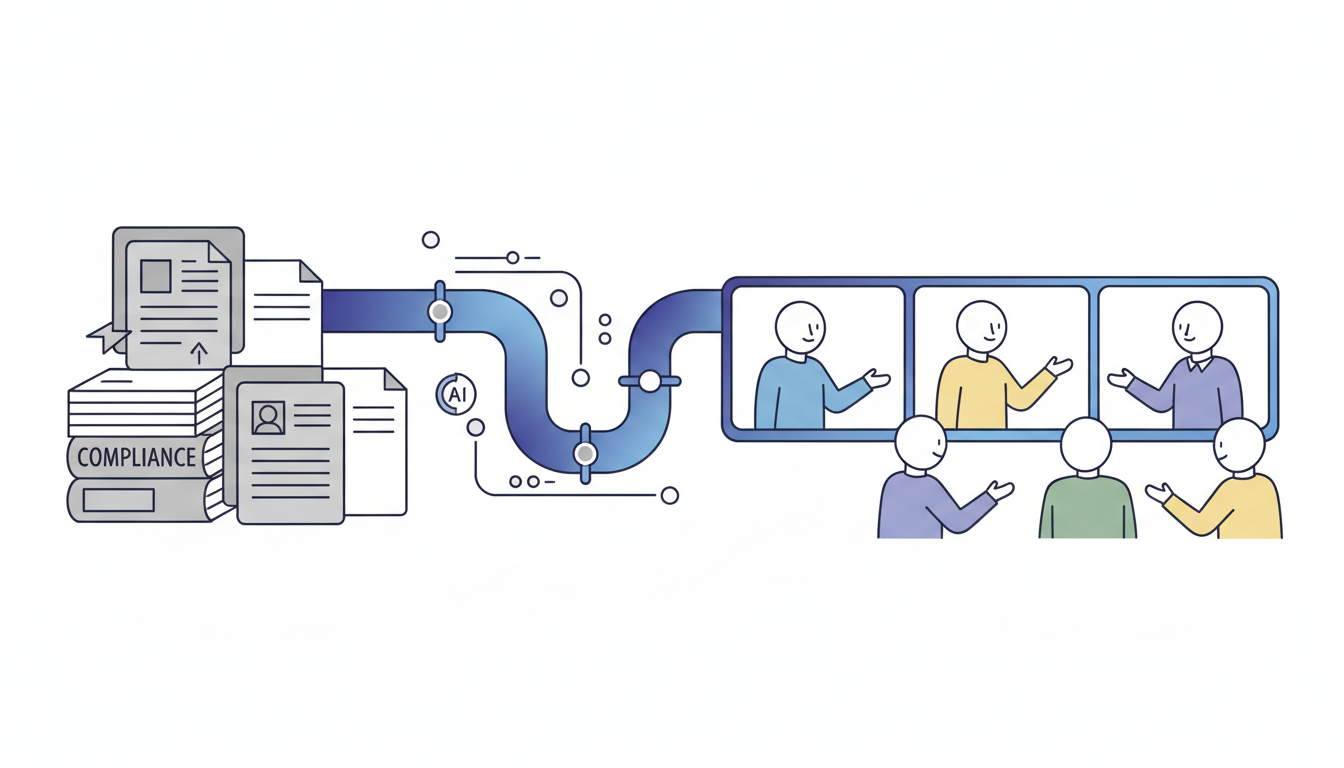
The most successful organizations are recognizing that compliance training creation doesn't have to consume entire weeks. They're investing in solutions that transform documents directly into interactive training, automate regulatory tracking, and empower subject matter experts to create content independently.
Leaders are struggling with data analytics, AI, and instructional design at scale. Investing in upskilling the L&D team is now as important as training employees — without it, the function risks under-delivering on its growing mandate.
The question isn't whether your organization can afford to modernize compliance training creation. It's whether you can afford not to. Every hour your team spends on manual processes is an hour not spent on strategic learning initiatives that drive business results.
Your competitors who solve the 40-hour problem first will have a significant advantage. They'll create more current, engaging compliance training while freeing their L&D teams to focus on innovation instead of administration.
Ready to transform how your organization creates compliance training? Learn how AI-powered microlearning can reduce your content creation time by 90% while ensuring audit-ready materials that automatically stay current with regulatory changes.
AI Educational Microlearning Video Platform
ComplianceLearn AI is an intelligent microlearning platform that automatically transforms compliance documents and regul
Discover what we're building
Learn more about AI Educational Microlearning Video Platform and get started today.
Visit AI Educational Microlearning Video Platform